


Why interchangeability is usually only noticed when guests are missing
- Michael Brauneis

- Feb 13
- 3 min read
Updated: Mar 3
Why good businesses lose guests – and how to truly recognise it

There is that moment. It arrives quietly. Not with criticism. Not with a public backlash. But with empty tables. With quieter afternoons. With the diffuse feeling that “it used to be easier.” Most businesses realise far too late that they have become interchangeable. Not because they are bad. But because no one has a reason to choose them specifically. And that is the most dangerous state for a company.
Good quality is no longer enough – and that is not a provocation.
At this point, many entrepreneurs react reflexively. They invest in more social media. In better photos. In promotions, new formats or a rebranding. All understandable – and yet it often falls short. Because the real problem is almost never visibility. It lies before that. In a world where almost everything has become good, quality becomes the entry ticket – not the differentiator.
Good food.
Friendly service.
A coherent atmosphere.
We now expect that. Everywhere. The decisive question is no longer: “Are we good?”
But: “Why should people come to us specifically – and not somewhere else?”
Interchangeability does not arise from mistakes, but from a lack of meaning.
The paradox is this: most interchangeable businesses do hardly anything wrong. They function. They are well managed. They are professional. And that is precisely why they remain invisible. Interchangeability does not emerge where something is bad. It emerges where nothing becomes emotionally anchored.
Where a visit leaves no inner resonance.
Where it is not retold.
Where it is not missed.
Or put differently: when a place is visited – but no relationship is formed.
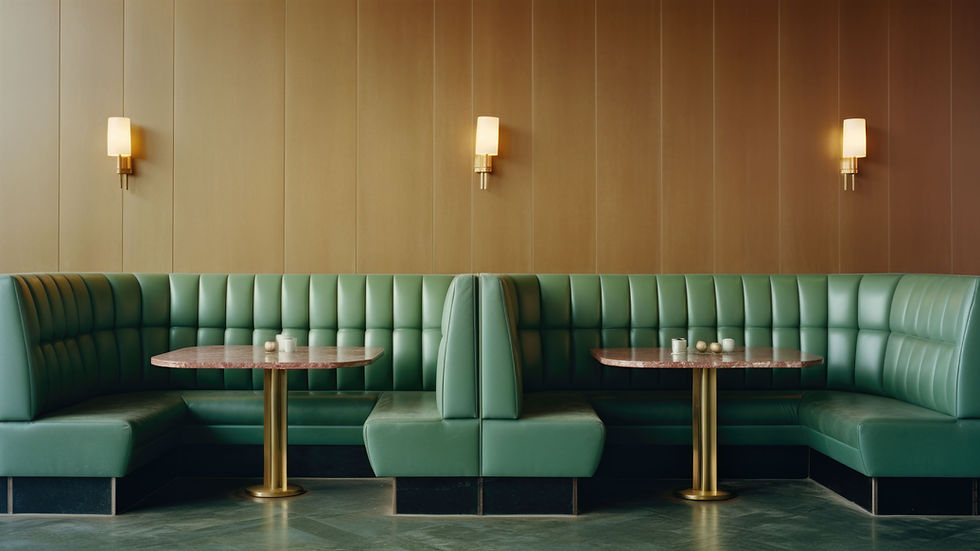
The most important moment of a visit never happens in the venue – it happens with the guests.
The decisive moment of a visit does not take place at the table, not at reception, not when paying. It happens later. When someone asks: “And? How was it?” And that is where everything is decided. If the answer is: “It was fine.” Then it was correct. But meaningless. If the answer is: “You know, it was somehow special.” Then attachment begins. Then loyalty begins. Then economic relevance begins. At this point, many companies take the wrong approach. They believe Emotional Marketing is storytelling, communication or social media. In truth, Emotional Marketing does not begin in communication, but in the experience itself. It is not the telling that creates meaning. It is what is worth telling. And this is exactly where Performance Marketing separates from what WowNice stands for.
Performance optimises what already exists.
Emotional Marketing determines whether something is remembered.
Why this topic is decisive right now
The expectations of guests and customers have exploded. Not because businesses have become worse – but because comparability is omnipresent.
Reviews.
Social media.
Recommendations.
Rankings.
Everything is visible. Everything is comparable. What gets lost is not attention. But meaning. And that is precisely why many companies come under pressure, even though they objectively “do everything right.”

A different starting question
Perhaps it is time to ask a different question.
Not:
“How do we get more guests?”
But:
“What remains of us once the visit is over?”
This question is more uncomfortable. But it is more honest. And it is the beginning of everything that follows.
In the next article, we will look at why classical marketing logic fails precisely at this point – and why more visibility often only makes the wrong problem louder.
Welcome to the WowNice Experience Atelier.
This was only the beginning.


